Charlie Chaplin 1st appeared as the tramp in a 1914 Keystone short, improvised in front of the crowd at a children’s go-cart race in Venice, California, & it’s startling to see how instantly recognizable he is from the start. Earlier this month the San Francisco Silent Film Festival held a wonderful one day event at the Castro Theatre commemorating the 100th anniversary, to the day, of Chaplin’s iconic character. There were 3 different programs of classic shorts & feature films, all with live music.
Jon Mirsalis accompanied 3 shorts from Chaplin’s Mutual period. His pleasant & relaxed playing provided a simple, child-like mood for the films. 16 musicians from the San Francisco Chamber Orchestra accompanied The Kid & The Gold Rush. The band included piano, strings, woodwinds, brass & percussion. Their apparently unamplified sound filled the Castro Theatre beautifully, & their playing for conductor Timothy Brock was warm & floaty. Mr. Brock also arranged the music from Chaplin’s own scores for the films.
Artistic Director Anita Monga welcomed the audience but balked while reading a quote from the program because the print was too small. Historian Jeffrey Vance
introduced the 2 feature films & displeased the festival
audience when he debunked the myth of Chaplin ending up a loser in a
Chaplin look-alike contest in the 1920s. Mr. Vance also pointed out in
the audience the last surviving divorce lawyer of Lita Grey, Chaplin’s
2nd wife.
At the showing of The Kid, Stephen Salmons conducted a Charlie Chaplin look-alike contest, with 16 contestants of various ages and genders. The audience selected the winners by clapping, though it was unclear whether it was the length or the loudness of our applause that was the determining factor. We were also given fans with Chaplin’s face on them, which we held over our faces so that a photographer could capture a picture of a theater full of Chaplins.
The theater got more crowded with each show, & the lively festival audience applauded the famous gags in The Gold Rush. Children were few, though their laughter was loud & clear every time a character got hit on the head. A major plumbing failure created a long, slow line for the men’s room at the 4p show.
§ The Little Tramp at 100
A Charlie Chaplin Centennial Celebration
San Francisco Silent Film Festival
January 11, 2014 at the Castro Theatre
§ 1:00pm
Our Mutual Friend: Three Chaplin Shorts
Piano accompaniment by Jon Mirsalis
The Vagabond (1916)
2013 restoration with modern intertitles
Easy Street (1917)
2012 restoration
The Cure (1917)
2013 restoration
§ 4:00pm
Kid Auto Races at Venice, CA (1914)
Accompanied by Jon Mirsalis on piano
The Kid (1921)
Introduced by Jeffrey Vance
Accompanied by Timothy Brock conducting the San Francisco Chamber Orchestra
World premiere of Mr. Brock’s chamber arrangement of Chaplin’s score for the 1971 version
§ 7:30pm
The Gold Rush (1925)
Introduced by Jeffrey Vance
Accompanied by Timothy Brock conducting the San Francisco Chamber Orchestra
1993 reconstruction, accompanied by Mr. Brock’s chamber arrangement of Chaplin’s score for the 1942 version
Friday, January 31, 2014
Thursday, January 30, 2014
Handel’s Theodora
Last weekend a friend invited me on a field trip to Weill Hall at Sonoma State to hear The English Concert perform Handel’s Theodora. The performance was very proficient. Conductor Harry Bicket led from a harpsichord, & the orchestra of 25 played with impressively tight ensemble & clean intonation. The strings’ 32nd notes during “Kind Heav’n” were astonishingly neat & together, & leader Nadja Zwiener displayed effortless virtuosity in “Sweet rose and lily.” The brass & wind players sometimes stood for their solos. Maestro Bicket often connected the numbers, & the performance flowed at an even pace.
Countertenor David Daniels as Didymus was an expressive singer & had a dense, muscular sound. Soprano Dorothea Röschmann had a somewhat metallic sound & sang with nice rubato. Mezzo Sarah Connolly was solid, weighty & serious as Theodora’s companion Irene. Tenor Kurt Streit, replacing the originally announced Andrew Kennedy, was a bright & urgent singer. I liked the mocking way he sang “Mistaken wretches! ... Dread the fruits of Christian folly.” At one point he picked up a page of music that had fallen to the floor & placed in on the conductor’s harpsichord. Bass-baritone Neal Davies was appropriately blustery & barking as the tyrant Valens. The youthful 24 member Choir of Trinity Wall Street was great. I liked their grounded, warm & cushy sound. They portrayed a very human chorus.
My concert companion & I sat in the center of the balcony, where it was easy to hear all the musicians, even the theorbo player, though somehow the sound from the stage never seemed quite hall-filling. The concert ran nearly 4 hours, including 2 short intermissions which the printed program failed to specify. The audience was very quiet throughout & even let the silence linger at the conclusion of each part. There was major audience attrition after part 2, but those that remained gave the performers sustained applause & a standing ovation. The online listing mistakenly labels the event as “An Opera in Concert.”
§ Handel's Theodora
The English Concert
Harry Bicket, conductor
Dorothea Röschmann, Theodora
Sarah Connolly, Irene
David Daniels, Didymus
Kurt Streit, Septimius
Neal Davies, Valens
The Choir of Trinity Wall Street
Julian Wachner, director
Saturday, January 25, 7:30 pm
Weill Hall at Sonoma State University
Countertenor David Daniels as Didymus was an expressive singer & had a dense, muscular sound. Soprano Dorothea Röschmann had a somewhat metallic sound & sang with nice rubato. Mezzo Sarah Connolly was solid, weighty & serious as Theodora’s companion Irene. Tenor Kurt Streit, replacing the originally announced Andrew Kennedy, was a bright & urgent singer. I liked the mocking way he sang “Mistaken wretches! ... Dread the fruits of Christian folly.” At one point he picked up a page of music that had fallen to the floor & placed in on the conductor’s harpsichord. Bass-baritone Neal Davies was appropriately blustery & barking as the tyrant Valens. The youthful 24 member Choir of Trinity Wall Street was great. I liked their grounded, warm & cushy sound. They portrayed a very human chorus.
My concert companion & I sat in the center of the balcony, where it was easy to hear all the musicians, even the theorbo player, though somehow the sound from the stage never seemed quite hall-filling. The concert ran nearly 4 hours, including 2 short intermissions which the printed program failed to specify. The audience was very quiet throughout & even let the silence linger at the conclusion of each part. There was major audience attrition after part 2, but those that remained gave the performers sustained applause & a standing ovation. The online listing mistakenly labels the event as “An Opera in Concert.”§ Handel's Theodora
The English Concert
Harry Bicket, conductor
Dorothea Röschmann, Theodora
Sarah Connolly, Irene
David Daniels, Didymus
Kurt Streit, Septimius
Neal Davies, Valens
The Choir of Trinity Wall Street
Julian Wachner, director
Saturday, January 25, 7:30 pm
Weill Hall at Sonoma State University
Tuesday, January 07, 2014
The Music in Your Brain
A recent podcast from Australian radio about the neuroscience of music includes an interview with composer Tobias Picker talking about his Tourette's & his body's response to hearing soprano Susannah Biller sing Verdi. I also learned that babies in the womb have a fully developed auditory system at 20 weeks & subsequently show a preference for music they heard in the womb.
§ The Music in Your Brain
Radio National
All in the Mind
Sunday 5 January 2014 5:00PM
§ The Music in Your Brain
Radio National
All in the Mind
Sunday 5 January 2014 5:00PM
Wednesday, December 25, 2013
Asghar Farhadi's The Past
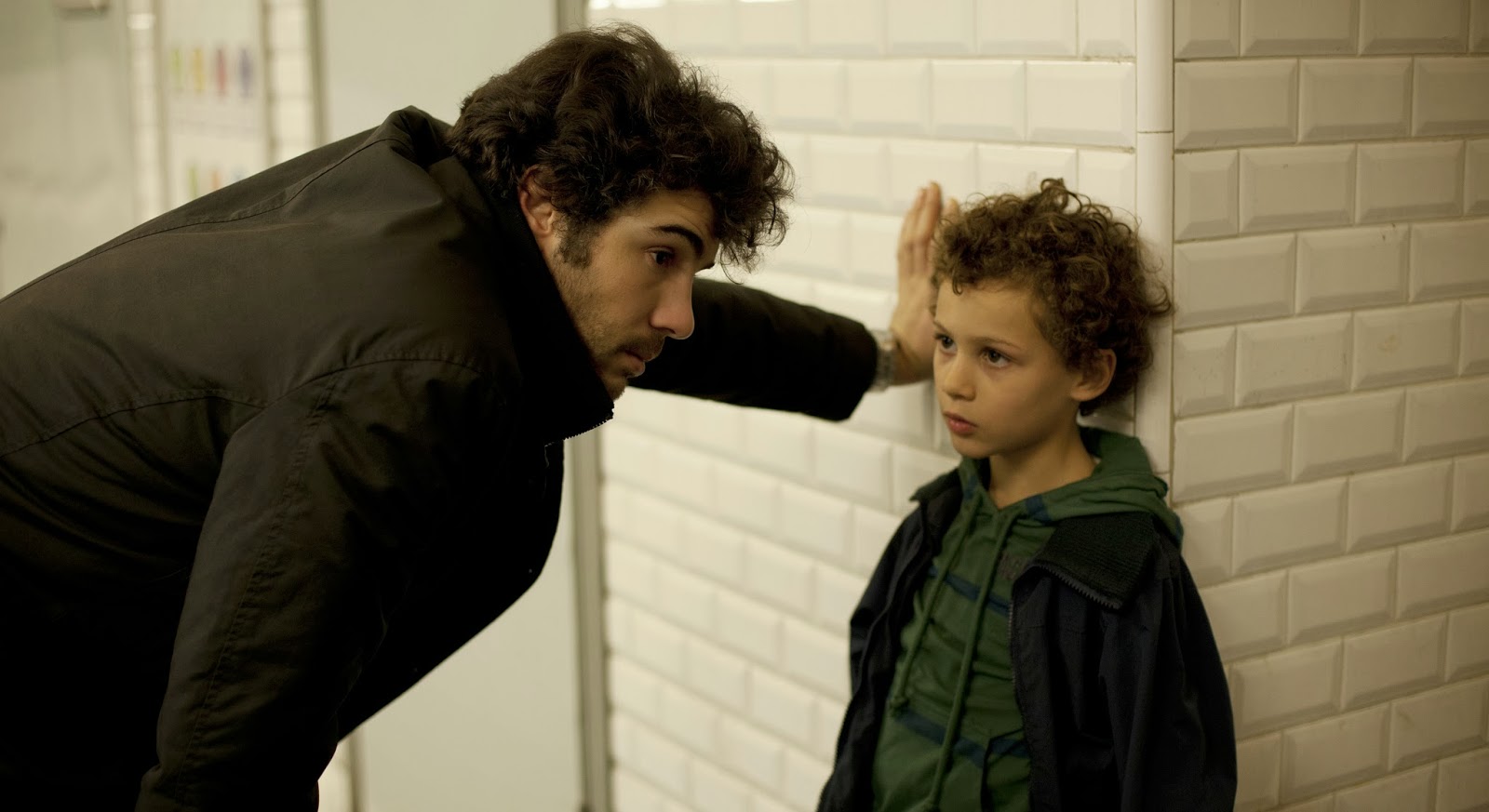
In this new movie by Iranian filmmaker Asghar Farhadi, an Iranian man, Ahmad, returns to Paris to formalize his divorce from his French wife, Marie, so that she can marry her new boyfriend, Samir. We never learn why Ahmad & Marie's marriage broke up, but Marie's domestic life is stressful & chaotic, & her new marriage will combine children from both partners. Without intending to, Ahmad triggers a series of unsettling revelations, leading to increasingly dramatic confrontations. I had to keep reframing the characters’ relationships, & the movie constantly challenged my judgments. Though the film is over 2 hours long & nearly plotless, it is taut & emotionally tense. At times it is like watching a play. Mr. Farhadi has steely clear vision, & there is probably nothing on screen that isn't precisely intended. The cast is attractive & intelligent. A protracted moment during which the 2 men find themselves alone with nothing to say to one another is both funny & exceedingly uncomfortable. The film's children are believable & powerfully depicted. A showdown between Samir & his 5-year-old son in the Paris Metro is painfully distressing to witness.
The movie is mostly in French, though, interestingly, the press materials indicate that Mr. Farhadi does not speak French & that Ali Mosaffa, the Iranian actor playing Ahmad, had to come up to speed in French within a few a weeks. The Past opens in San Francisco on December 27th & then in other Bay Area locations in the following weeks.
§ Le passé (The Past) (2013)
France, 130 minutes
Directed by Asghar Farhadi
Starring Bérénice Bejo, Tahar Rahim and Ali Mosaffa
Monday, December 23, 2013
Sad Christmas Tree
Sunday, December 22, 2013
Renegade Craft Fair Winter Market
The winter edition of the indie marketplace the Renegade Craft Fair was impressively crowded Saturday afternoon. It seemed to be a day out for lots of families, & there was much socializing among the predominately female attendees. According to the fair map, there are over 300 vendors, & they put a lot of effort into making their products look appealing. I saw plenty of jewelry, printed tea towels & clothing, as well as a range of items from baseball bats to toffee. Food products seemed to be popular with shoppers. Concert posters by John Howard, some in 3-D & inspired by the psychedelic '60s, were striking. It was nice to see wooden pie boxes made in Chicago. I bought one on-line for a wedding gift earlier this year, but up to now had never had a chance to see it in real life.§ 5th Annual Renegade Craft Fair Winter Market
December 21 + 22, 11am – 6pm
Concourse Exhibition Center
Wednesday, December 18, 2013
An Appreciation for Music
One day I went out and bought a recording of Beethoven's Second Symphony and was so taken with it that I began to accumulate all the Beethoven symphonies. I then went on to Brahms, Mendelssohn and all the others. By that time, the first long-playing records had appeared, and my friends and I would listen to each other's new albums. That was the way I developed an appreciation for music. It is amazing how much you can learn about music just by reading the backs of album covers.Charles Schulz. Charlie Brown, Snoopy, and Me
Friday, December 13, 2013
ABS: Handel's Messiah
Wednesday night I attended the 1st of 2 Messiah performances by American Bach Soloists in Grace Cathedral. The setting was made even more stunning by seasonal decorations of long, shimmering ribbons hanging in the interior. There was a feeling of a special event. The Rt. Rev. Marc Andrus, Episcopal Bishop of California, introduced the program, praised the musicians & conductor Jeffrey Thomas, & urged us to act in solidarity with the poor.The performance was immaculate & had the manner of a well-prepared ritual. My concert companion declared it "flawless." The cathedral's long reverberation time gave the music a gauzy halo. The orchestra often played softly to minimize sounding muddy. The overture was pianissimo, creating an eerie & expectant atmosphere. Tempos were measured, with occasional brief rubatos. "He shall feed his flock" had a slightly indulgent pace. Maestro Thomas liked to make clear dynamic contrasts between phrases, & the ends of numbers were always meticulously executed.
The soloists stood in the middle of the orchestra rather than out front. Soprano Shawnette Sulker sang with a high, bright & tight voice. Countertenor Eric Jurenas had a focused, narrow sound & was assigned "But who may abide the day of his coming," "Thou art gone up on high" & "If God is for us," besides the traditional alto arias & may have gotten slightly fatigued. Tenor Aaron Sheehan was wonderfully consistent. His clear, bell-like voice carried well. I enjoyed hearing baritone Mischa Bouvier's warm, furry & comforting sound. John Thiessen accompanied him in "The Trumpet shall sound" on a mellow-sounding Baroque trumpet which he played with impressive accuracy. The chorus of 35 singers was split, with sopranos & tenors on the left of the orchestra, altos & basses on the right. They sang with precision & had a transparent texture. Because of the stereophonic separation, phrases bounced from one side to the other in fugal passages.
The serious-minded audience was as focused as the performers. The attentive silence throughout was palpable. Even though a couple at the end of my row slipped out after the Hallelujah Chorus, this was among the quietest audiences I've ever been in. Despite a program note debunking the origin story of the tradition of standing for the Hallelulah Chorus, the audience rose without hesitation for a "Hallelulah!" with a perfectly smooth & even surface.§ Handel's MESSIAH
American Bach Soloists
Jeffrey Thomas, music director
Shawnette Sulker, soprano
Eric Jurenas, countertenor
Aaron Sheehan, tenor
Mischa Bouvier, baritone
with the American Bach Choir
Wednesday, December 11 2013, 7:30 pm
Grace Cathedral
Tuesday, December 10, 2013
San Francisco Bazaar Holiday Show
Over the weekend I visited the San Francisco Bazaar Holiday Show at the Concourse Exhibition Center, a sprawling marketplace of independent vendors & hand-crafted items. Just about everything was eye-catching, though this is not a cheap place to shop. The atmosphere & the offerings were generally girlie, & I walked by lots of t-shirts, stationery, jewelry, DIY kits & children's clothing & cupcakes. Stuff made out of other stuff was a common theme. I saw things like wallets made out of seat belts, Christmas ornaments made from maps & terrariums growing in discarded computer chassis. I enjoyed handling the finely constructed artist's books from Green Chair Press, some of which fit inside a matchbox & feature pop-ups & unusual bindings. Attendees, & maybe vendors too, were predominately women.§ San Francisco Bazaar Holiday Show
December 7th & December 8th 2013 11-6PM each day
Concourse Exhibition Center
Monday, December 09, 2013
East Bay Alternative Book and Zine Fest
This Saturday I checked out the East Bay Alternative Book & Zine Fest. It's grown quite a bit in its 4 years. Close to a hundred exhibitors were crammed into a downstairs room at Berkeley City College. The space behind tables was so tight that some vendors took to crawling under their tables to get out. They were a diverse group, from artists to established independent publishers to first-time zinesters. It was nice to see some old-school zines, like Abigail Young's Camel Toe, which definitely wins the prize for best-named zine. It has content to match. It was fun to see zinester Jason Martin & recreate our scene from his story in Tablegeddon. I also had enlightening chats with the flat-capped Andy Warner & the ebullient Brian Herrick. There is speculation that the independent comics scene is reaching a crisis where there are more creators than readers & that these expos are just gatherings where creators sell to one another.§ East Bay Alternative Book & Zine Fest (EBABZ)
Dec 7th, 2013 | 10 am - 5 pm | Berkeley City College
Wednesday, November 27, 2013
Mary Wilson Sings Handel
Next month American Bach Soloists releases a CD of 3 Handel sacred works featuring soprano Mary Wilson. Handel's music is of course attractive & vigorous, & I'm happy that the CD includes Silete venti, which the same personnel performed so gorgeously last season. Ms. Wilson is a great fit for this repertroire. Her voice is wonderfully warm, smooth & gleaming & communicates joy. She executes the many virtuosic passages with ease. In the bravura Alleluja of Silete venti, her singing is agile & her rapid notes connected yet distinct. She sounds perfectly smooth & gliding in the long phrases of the "Suscitans a terra" of Laudate Pueri Dominum. Just like ABS's live performances, this recorded performance is well-prepared & immaculate. Oboist John Abberger's solos are impressively clean & sustained. The orchestra & chorus sound tidy, & the tempos are regulated & balanced, feeling neither too fast or too slow.
The CD will be officially released on December 10th, 2013 & is available for pre-order on iTunes. If you buy it on iTunes, you can download the 1st track now, & the rest of the album will download automatically on December 10th. Program notes are also on-line.
§ Mary Wilson Sings Handel
American Bach Soloists
Jeffrey Thomas, music director
Mary Wilson, soprano
GEORGE FRIDERIC HANDEL:
Silete venti HWV 242
Laudate, pueri, Dominum HWV 237
Gloria HWV deest
Release date: December 10th, 2013
Pre-Order on iTunes
Thursday, November 21, 2013
SFO: Barber of Seville
![]() |
| Alessandro Corbelli (Doctor Bartolo) and Lucas Meachem (Figaro). Photo by Cory Weaver. |
The set consists of a diagonal slice of floor & moveable walls along one side, containing doors & windows. It looks incomplete to me. The staging is packed with random visual jokes & is very busy but not very coherent. I never felt that anything was really at stake. Props include an exercise bicycle, cotton candy & a gigantic bust of Rossini. 8 Spanish dancers participate in the action, & characters sometime crawl out from beneath the set. At the end of act 1 the principals attempt to exit down ladders into the orchestra pit & then find themselves on the wrong side of the descending curtain. I was confused about what part of the house the characters were in during the elopement scene in act 2.
The orchestra played extrovertedly under conductor Giuseppe Finzi. Tempos were brisk, & there were a few moments when the orchestra & singers were not in sync. I liked hearing the clarinet & flute solos. A harpsichord accompanied the recitatives for Bartolo & Basilio while a fortepiano accompanied the younger characters. I was in upstairs standing room & spent a lot of time watching the woman seated in front of me bounce up & down to Rossini's music. During intermission the odor of pot wafted from a knot of older patrons on the outside balcony.§ Il Barbiere di Siviglia
Music by Gioachino Rossini
San Francisco Opera
Conductor: Giuseppe Finzi
Director: Emilio Sagi
Fiorello: Ao Li
Count Almaviva: Javier Camarena
Doctor Bartolo: Alessandro Corbelli
Figaro: Lucas Meachem
Rosina: Isabel Leonard
Don Basilio: Andrea Silvestrelli
Berta: Catherine Cook
Ambrogio: A.J. Glueckert
Notary: Andrew Truett
An Officer: Hadleigh Adams
Tue 11/19/13 8:00pm
War Memorial Opera House
Wednesday, November 20, 2013
Three Acts, Two Dancers, One Radio Host
Sunday afternoon I saw public radio broadcaster Ira Glass & dancers Monica Barnes & Anna Bass in a live performance with the ungainly title of Three Acts, Two Dancers, One Radio Host. The hybrid show combined interviews from This American Life with Mr. Glass's live commentary & dance. Mr. Glass stood at a lectern, which he assembled on stage at the start of the show, & triggered audio clips with an iPad. I'd never had a clear idea of what he looks like before, & it took me a while to adjust to his tall, lanky appearance. The dancers were incorporated into some stories & also performed their own numbers. The audience cheered Mr. Glass when he bravely danced a few times himself.The show ran an intermissionless 2 hours & was packed with many disparate stories. I liked hearing about the cast of Riverdance trying to win the lotto & about a businessman who approaches his marriage like a marketing campaign. A segment about the death of poet Donald Hall's wife was very sad & accompanied by the dancers moving in a slow embrace while precariously standing on a small table. It was fun to hear an outtake from a David Rakoff interview that was too obscene to broadcast. Mr. Glass made it obvious when he went off script, & at one point he confessed to being "terrified."
The show took place on a bare stage, but effective use was made of lighting & a small number of props. At one point, 6 audience members were pulled on stage to recreate a middle school dance, complete with disco ball & balloon arch. The show's finale included baton twirling & a confetti explosion. The Nourse Theatre looked full. The audience was attentive the entire time & gave the show a standing ovation.§ Three Acts, Two Dancers, One Radio Host
Performance | Monica Bill Barnes, Anna Bass and Ira Glass
Words | Ira Glass
Choreography | Monica Bill Barnes
Lighting Design | Jane Cox
Set/costume Design | Kelly Hanson
Production Director/Stage Manager | Robert Saenz de Viteri
Nourse Theater, San Francisco
Sunday, November 17, 2013, 2p
Tuesday, November 19, 2013
Luciano Chessa at the Columbarium
I dropped in at the Columbarium on Saturday evening to catch Luciano Chessa's LIGHTEST, a performance art piece that concluded a full afternoon of site-specific events presented by the SFMOMA. The audience, which had just watched a film, was being asked to rearrange their chairs around the center of the rotunda when I arrived. The piece took place in the dark & lasted just under half an hour. It was evidently about searching. At 1st, 7 performers roamed the building with flashlights while boom boxes on different floors played overlapping tracks of conversations & songs. I recognized The Great Pretender & The Muppet Show theme song. The centerpiece of the performance was Mr. Chessa playing an amplified saw under the rotunda. He produced an unexpected variety of sounds, from scraping metal to thunder claps to high metallic pitches. After his solo, the other performers converged on him, attached their lights to his clothing & then led him blindfolded around the building. The piece ended when they reaching their goal, the niche of Harvey Milk. The performance had a receptive audience. A photographer & videographer recorded the proceedings, even though it was very dark.§ Luciano Chessa: LIGHTEST
Saturday, November 16, 2013, 6:00 p.m.
Neptune Society Columbarium
Friday, November 15, 2013
Thursday, November 14, 2013
American Promise
For the documentary American Promise, filmmakers Joe Brewster and Michèle Stephenson filmed their son, Idris, & his classmate, Seun, as the boys entered kindergarten at Dalton, a progressive Manhattan private school. They were among the few African Americans in the predominately white student body. For the next 13 years, the filmmakers made observational footage of them at school, at extracurricular sports & with their families.
The implicit context for the film is the Black Male Achievement Gap, a phenomenon in which black males do far worse academically than their white counterparts. Idris & Seun are neither poor students nor brilliant ones, but we see how fear of her son falling behind causes Idris's mother to frantically supervise his homework. Idris's father, a Stanford graduate, is equally fearful as he tries to goad his son with foreboding speeches. The film is a bit flaccid at nearly 2 and a half hours long. I did not leave feeling like I knew its subjects well, though I enjoyed a scene of the 2 boys discussing cardigans, which exposes a social gap between them. American Promise open in the Bay Area on November 15th.
§ American Promise (2013)
A Documentary Directed by Joe Brewster and Michèle Stephenson
140 minutes
Wednesday, November 13, 2013
The Armstrong Lie
Documentary filmmaker Alex Gibney originally set out to film a comeback story about Lance Armstrong's return to the Tour de France in 2009. He filmed Mr. Armstrong in training & during the race & had nearly completed the film when the doping scandal broke. The film was put on hold. Then, earlier this year, Mr. Armstrong's confessional interview with Oprah gave Mr. Gibney the opportunity to refashion his movie as the story of Lance Armstrong's rise & fall. The Armstrong Lie shows Mr. Armstrong visiting cancer wards filled with young children & taking a random drug test administered by officials who turn up at his home, but it also features a post-Oprah interview & interviews with less-than-admiring journalists & colleagues. We get glimpses of Michele Ferrari, the cagey Italian physician who oversaw athletes' doping regiments. The focus is on the brazen lies & evasions all around, though there's no new information here.
I liked the thrilling footage of the Tour de France race, some of it shot by cameras mounted on bicycles. Drunken spectators who run onto the racecourse are one of the race's hazards. The idea of doping is put into context by an amusing sequence showing competitors in the early days of the Tour de France drinking alcohol to keep themselves going. Mr. Gibney narrates the film, & his ambivalent attitude toward Mr. Armstrong is partly its subject, but since we now know that everyone was doping, it is not clear why censure should fall on Mr. Armstrong in particular. The Armstrong Lie opens in the Bay Area on November 15th.
§ The Armstrong Lie (2013)
Alex Gibney, writer & director
USA, 123 min.
Tuesday, November 12, 2013
MIS Historic Learning Center
Fittingly for Veterans Day, I saw the ribbon cutting ceremony for the Military Intelligence Service Historic Learning Center in the Presidio. The refurbished building finally gives the National Japanese American Historical Society it's own building. It's on the site of the US Army's secret language school, set up in 1941 & staffed with bilingual Japanese American soldiers. The school relocated to Minnesota the next year, when the government evacuated all Americans of Japanese ancestry from the West Coast.
Boys Scouts led us in the Pledge of Allegiance...
and provided a bit of band music.
There was a good turn-out of venerable war veterans, whose average age must be 90.
Somehow the organizers managed not to have a working PA system, so I could not hear the speakers & had no idea who they were.
After 90 minutes of ceremony, we were let into the building. At the moment it's pretty basic, but it houses a classroom, space for temporary installations & a gift shop.
§ Military Intelligence Service Historic Learning Center (Bldg. 640)
San Francisco Presidio
Ribbon Cutting Ceremony
Monday, November 11, 2013 – 9 AM.
Friday, November 08, 2013
Philippe Sly at Rex Salon
Wednesday evening I heard bass-baritone Philippe Sly, accompanied by guitarist John Charles Britton, sing 15 Schubert songs in a sold-out Salon at the Rex. The 2 musicians sat close together on 2 chairs & shared one music stand. Mr. Sly told us that he purposely omitted translations from the program, so he instead read the translations to us before each song. He scaled his performance to the quietness of the guitar & the small venue. Both his speaking & singing voice were soothing, & his sound was clean, unfussy & often soft. The youthfulness of his voice fit the music well. He sang "Mein!" with nice contrasts, & his "Abschied von der Harfe" had a sustained quality. Mr. Britton did his own guitar transcriptions, which seemed very literal & also very challenging. He sometimes struggled to play all the notes.
The salon audience was attentive & appreciatively applauded each song. In the Q & A afterward we learned that German is Mr. Sly's favorite language to sing & that he finds it harder to sing in a language he speaks fluently. Mr. Sly comes across as an exceedingly pleasant person. He joked about the audience's drinking & laughed when Mr. Britton reminded him to read one of the poems. He readily allowed that excerpting from Die schone Müllerin & Winterreise was "blasphemy" but explained that he picked songs based on accompaniments that worked for the guitar. Apologizing for such a dark & serious program, he gave us the 1st song from Ravel's Don Quichotte cycle as a light encore.
§ Philippe Sly, bass-baritone
John Charles Britton, guitar
Salon at the Rex
Franz Schubert (1797-1828)
Nachtstück
Ständchen
Lachen und Weinen
Auf dem Wasser zu singen
Der Tod und das Mädchen
Du bist die Ruh
Abschied van der Harfe
An die Musik
from Die schone Müllerin
Wohin?
Mein!
Der Müller und der Bach
from Winterreise
Gute Nacht
Der Lindenbaum
Der Wegweiser
Der Leiermann
Encore:
1st song from Ravel's Don Quichotte à Dulcinée
The salon audience was attentive & appreciatively applauded each song. In the Q & A afterward we learned that German is Mr. Sly's favorite language to sing & that he finds it harder to sing in a language he speaks fluently. Mr. Sly comes across as an exceedingly pleasant person. He joked about the audience's drinking & laughed when Mr. Britton reminded him to read one of the poems. He readily allowed that excerpting from Die schone Müllerin & Winterreise was "blasphemy" but explained that he picked songs based on accompaniments that worked for the guitar. Apologizing for such a dark & serious program, he gave us the 1st song from Ravel's Don Quichotte cycle as a light encore.§ Philippe Sly, bass-baritone
John Charles Britton, guitar
Salon at the Rex
Franz Schubert (1797-1828)
Nachtstück
Ständchen
Lachen und Weinen
Auf dem Wasser zu singen
Der Tod und das Mädchen
Du bist die Ruh
Abschied van der Harfe
An die Musik
from Die schone Müllerin
Wohin?
Mein!
Der Müller und der Bach
from Winterreise
Gute Nacht
Der Lindenbaum
Der Wegweiser
Der Leiermann
Encore:
1st song from Ravel's Don Quichotte à Dulcinée
Thursday, November 07, 2013
Falstaff at SF Opera
Last week I attended the 2nd to last performance of Verdi's Falstaff at SF Opera. The production was well-cast, though bass-baritone Bryn Terfel was obviously the star. His voice was full & cushy & seemed to get warmer & more comfortable as the evening went on. He sang with variety & expression, & his performance had a spontaneous feel. His Falstaff was good company & comical without being cartoonish. The audience particularly laughed when he appeared in act 2 extravagantly dressed in red, looking like a cross between a rooster & a pitcher of Hawaiian Punch.
The female singers all had strong voices. Soprano Ainhoa Arteta as Alice sounded consistently sturdy. Contralto Meredith Arwady's voice was robust, & she played Dame Quickly with a bold sense of fun. Baritone Fabio Capitanucci was a theatrical Ford & fell to the floor when giving vent to his character's jealousy in act 2. The voice of tenor Francesco Demuro as Fenton rang out clearly, with a bit of tension in his high notes. Tenor Joel Sorensen put a lot of character into his singing & physical acting as the bandy-legged Dr. Caius. Bass Andrea Silvestrelli was Pistola, & his deep, orotund voice is so distinctive that it popped out at me whenever he opened his mouth.
The set was composed of flat wooden surfaces & looked similar for all scenes. It was perhaps meant to evoke a Renaissance stage. A large trapdoor hinged up from the middle of the floor to represent the Garter Inn, making it look like Falstaff lived in a giant, brick-lined clam shell. A lot of white laundry linen is tossed in the air during the scene in Ford's house.
Maestro Nicola Luisotti's conducting was brisk & extroverted. The orchestra played out, & there were nice woodwind solos. For the final scene, a musician dressed as a huntsman stood in box A & played the opening horn calls on a valveless horn. The grand pause at the end of the finale was dramatic, & Mr. Terfel's pianissimo utterance of "Tutti gabbati" was striking. I watched the performance from upstairs standing room. There was plenty of room at the railing, & I noticed 2 people reading scores. Many attendees arrived late & had to be seated after the 1st scene.
§ Falstaff
Music by Giuseppe Verdi
San Francisco Opera
Conductor: Nicola Luisotti
Director: Olivier Tambosi
Falstaff: Bryn Terfel
Alice Ford: Ainhoa Arteta
Nannetta: Heidi Stober
Dame Quickly: Meredith Arwady
Fenton: Francesco Demuro
Ford: Fabio Capitanucci
Meg Page: Renée Rapier
Bardolfo: Greg Fedderly
Dr. Caius: Joel Sorensen
Pistola: Andrea Silvestrelli
Wed 10/30/13 7:30pm
War Memorial Opera House
The female singers all had strong voices. Soprano Ainhoa Arteta as Alice sounded consistently sturdy. Contralto Meredith Arwady's voice was robust, & she played Dame Quickly with a bold sense of fun. Baritone Fabio Capitanucci was a theatrical Ford & fell to the floor when giving vent to his character's jealousy in act 2. The voice of tenor Francesco Demuro as Fenton rang out clearly, with a bit of tension in his high notes. Tenor Joel Sorensen put a lot of character into his singing & physical acting as the bandy-legged Dr. Caius. Bass Andrea Silvestrelli was Pistola, & his deep, orotund voice is so distinctive that it popped out at me whenever he opened his mouth.
The set was composed of flat wooden surfaces & looked similar for all scenes. It was perhaps meant to evoke a Renaissance stage. A large trapdoor hinged up from the middle of the floor to represent the Garter Inn, making it look like Falstaff lived in a giant, brick-lined clam shell. A lot of white laundry linen is tossed in the air during the scene in Ford's house.
Maestro Nicola Luisotti's conducting was brisk & extroverted. The orchestra played out, & there were nice woodwind solos. For the final scene, a musician dressed as a huntsman stood in box A & played the opening horn calls on a valveless horn. The grand pause at the end of the finale was dramatic, & Mr. Terfel's pianissimo utterance of "Tutti gabbati" was striking. I watched the performance from upstairs standing room. There was plenty of room at the railing, & I noticed 2 people reading scores. Many attendees arrived late & had to be seated after the 1st scene.§ Falstaff
Music by Giuseppe Verdi
San Francisco Opera
Conductor: Nicola Luisotti
Director: Olivier Tambosi
Falstaff: Bryn Terfel
Alice Ford: Ainhoa Arteta
Nannetta: Heidi Stober
Dame Quickly: Meredith Arwady
Fenton: Francesco Demuro
Ford: Fabio Capitanucci
Meg Page: Renée Rapier
Bardolfo: Greg Fedderly
Dr. Caius: Joel Sorensen
Pistola: Andrea Silvestrelli
Wed 10/30/13 7:30pm
War Memorial Opera House
Subscribe to:
Posts (Atom)