Saturday, February 15, 2014

Valentine's Day Pillow Fight

Pillow Fight
Early Friday evening I followed the stream of young people, many clutching newly-purchased pillows, heading toward the Ferry Building. What started as a flash mob several years ago is now an annual event. Participants & on-lookers filled Justin Herman Plaza.

Pillow Fight
There were some vigorous pillow-wielders, so this is as close as I dared get as a non-combatant. Feathers frequently went flying, & experienced pillow fighters wore dust masks.

Pillow Fight
All in all, it was a joyful & civilized spectacle, even for the non-Romantic like myself.

Thursday, February 13, 2014

Tim’s Vermeer

The film Tim's Vermeer, directed by Teller of Penn & Teller, documents what might be the ultimate DIY project. Tim Jenison, developer of the Video Toaster, an early video editing application for desktop computers, is obsessed with the 17th century Dutch painter Vermeer. The film follows him as he sets out to paint his own version of The Music Lesson, attempting to recreate Vermeer's photorealistic effects. Mr. Jenison is a talented tinkerer but not a painter. Inspired by the research of architect Philip Steadman & artist David Hockney, both of whom appear in the film, he devises an ingenious system of lenses & mirrors to guide his brush strokes. The preview audience I sat with gasped when it watched him use the technique to paint a copy of a black and white photograph with astonishing fidelity. There are many such “Wow” moments.

With unflappable calmness & grit, Mr. Jenison constructs an exact replica of the room depicted in the painting, builds his own furniture, learns to read Dutch, makes his own lenses & even grinds his own pigments. The final third of the film captures his painstakingly slow but steady progress as he fills in the painting over a period of months. Even though we are basically watching paint dry, the sequence is captivating.

The film’s dreamy, contemporary score by Conrad Pope figures prominently, but I initially mistook a track with a busy violin solo as the “Dogjam” movement from John’s Book of Alleged Dances by John Adams. The best musical moment, though, occurs when Mr. Jenison receives a viola da gamba as a prop for the painting & immediately puts it between his legs & plays "Smoke on the Water.”

Tim’s Vermeer opens in San Francisco on February 14th & around the Bay Area on February 21st.

§ Tim’s Vermeer
A Penn & Teller Film
Teller, dir. USA. 80 mins.

Wednesday, February 12, 2014

NCCO: Open Rehearsal

New Century Chamber Orchestra photo IMG_20140211_095545_zps622c4f58.jpgTuesday morning I attended an open rehearsal of the opera-themed program that the New Century Chamber Orchestra is presenting this week in 4 Bay Area locations. In the first half, we heard the Intermezzo from Cavalleria Rusticana, the Prestissimo movement from Verdi’s string quartet, & the Meditation from Thais, with Nadja Salerno-Sonnenberg as soloist. New Century plays without a conductor, though Ms. Salerno-Sonnenberg definitely leads. They played each piece first without stopping, then went back over it, working out tempo & ensemble issues through discussion among members. After they played the Intermezzo a 2nd time with more articulation between sections, Ms. Salerno-Sonnenberg joked to the audience, “Disregard the first performance.” Her solo in the Meditation had a dark, woody texture. Weirdly, the arrangement by Clarice Assad has a marimba replacing the harp.

New Century Chamber Orchestra photo IMG_20140211_113404_zps22028467.jpgAfter a break, we saw a complete run-through of Rita, an ebullient one-act comic opera by Donizetti, lasting an hour. Adler Fellows Maria Valdes, Thomas Glenn & Efraín Solís are a lively & appealing cast. They sing in Italian but speak the dialogue in English, & that is enough to communicate the basic plot, which involves 2 men each trying not to be declared the rightful husband of the shrewish title character. Eugene Brancoveanu, another Adler Fellow, did the funny, fast-paced staging, which involves a lot of spousal abuse & fights. The addition of woodwinds & horns gave the orchestra a much fuller sound. Ms. Salerno-Sonnenberg was very busy playing, conducting, & keeping an eye on the singers. After the run-through, she went over spots where the singers were dragging. The rehearsal took place in a high-ceilinged room that was nice for voices. The enthusiastic audience applauded frequently. Coffee & donuts were served during the break.

§ Open Rehearsal
New Century Chamber Orchestra
Nadja Salerno-Sonnenberg, Music Director

Mascagni (arr. Assad): Intermezzo from Cavalleria Rusticana
 

Verdi: Prestissimo from String Quartet in E minor

Massenet (arr. Assad): Meditation from Thais
    Nadja Salerno-Sonnenberg, violin

J. Strauss (arr. Lindstrom): Overture to Die Fledermaus

Donizetti: Rita
Rescored & edited by Peter Grunberg
    Maria Valdes, Rita
    Thomas Glenn, Beppe
    Efraín Solís, Gasparo
    Eugene Brancoveanu, Director, Script, Production Design

Tuesday, February 11, 2014, 10am
Kanbar Performing Arts Center, San Francisco

Monday, February 10, 2014

Disney Goes to the Opera

Saturday afternoon I attended a talk at the Walt Disney Family Museum about Disney cartoon shorts that feature operatic music. The event was held in the museum's theater, a comfy screening room that seats perhaps 200. Film music historian Ross Care showed film excerpts & talked about the animation. Between clips, tenor Casey Candebat, from the Merola Opera Program, sang a selection of songs & opera arias, accompanied by Jean Kellogg, Merola's Executive Director, playing an electric keyboard. The singing wasn't really integrated with Mr. Care's talk, but it was a great treat to hear Mr. Candebat's cushy, substantial & well-bolstered sound in an intimate space. At full volume, he probably changed the air pressure in the room. I enjoyed hearing him sing the American popular songs as much as the opera arias. Mr. Candebat was an entertaining talker as well, & he was delighted by the singing chicken in Mickey's Grand Opera, since he already refers to coloratura sopranos as "cluck-aturas." He also attempted the Habanera from Carmen, using a surprisingly weighty falsetto voice. I was glad we got to see all of The Whale Who Wanted to Sing at the Met, a completely surreal parody of opera & opera singers. Its version of Tristan & Isolde is devastatingly silly & accurate.

When I arrived at the museum, I was informed that the talk was sold out. Fortunately there were a few open seats just before it started, & I was able to get in. The audience clearly enjoyed the cartoons & the singing, except for 4 fidgety children in the 2nd row who were too young for the presentation.

§ Talk | Disney Goes to the Opera
Ross Care, Disney historian
Jean Kellogg, Merola Opera Program Executive Director
Casey Candebat, tenor

Sat, Feb 8, 2014, 3pm
Walt Disney Family Museum

§ Playlist
Cartoon Shorts
The Merry Dwarfs (1929)
The Goddess of Spring (1934)
Music Land (1935)
Mickey's Grand Opera (1936)
The Whale Who Wanted to Sing at the Met (1946)

Songs
"If I Could Tell You" by Idabelle Firestone
"Dein ist mein ganzes Herz" from The Land of Smiles by Franz Lehár
"Una furtiva lagrima" from  L'Elisir d'Amore by Gaetano Donizetti
"Vesti la giubba" from Pagliacci by Ruggero Leoncavallo
"L'amour est un oiseau rebelle" from Carmen by Georges Bizet
"Be My Love"from The Toast Of New Orleans by Sammy Cahn & Nicholas Brodzsky

Saturday, February 08, 2014

SESSIONS: A Tale of Two Keyboards

Thursday night I attended a special Philharmonia Baroque Orchestra event that included explanatory talks, selections from PBO's subscription concert this week, & a wine reception. The atmosphere was informal, & the evening seemed designed to be the least intimidating classical music experience possible. Local radio personalities Hoyt Smith & Rachael Myrow hosted & encouraged us to live tweet, post to instagram, & get “free booze” afterward.

We heard CPE Bach's Concerto for Fortepiano & Harpsichord & the 1st, 2nd & 4th movements of Haydn's Symphony No. 68. Conductor Nicholas McGegan & harpsichordist Robert Levin introduced each piece with a brief talk & slides about the composer. It was like going to a concert without needing to read the program notes first. I liked hearing Mr. Levin demonstrate the harpsichord by playing the opening of the Moonlight Sonata. Maestro McGegan was an especially funny & personable speaker. He gleefully pointed out the jokey cuckcoo theme in the Bach & the flatulent bassoon solos in the Haydn. He also told the audience, “You don’t need to go to concerts like you’ve recently been mummified.” While the stage was reset between pieces, Ms. Myrow interviewed orchestra member Kristin Zoernig, who told us that her double bass was built in 1648 & was played at Lincoln’s inauguration and funeral.

Philharmonia Baroque Orchestra photo IMG_20140206_193805_zps8940eaab.jpgMr. Levin on harpsichord & Ya-Fei Chuang on fortepiano were soloists for the CPE Bach double concerto. They both played crisply, though Ms. Chuang's playing was more rhythmically free. She looked very elegant at the keyboard. The orchestra gave a characteristcally lively, bouyant & sunny performance of the Haydn. For some reason it sounded twice as loud to me as the Bach.

The concert portion ran about 75 minutes, then the audience quaffed complimentary wine on the 2nd floor. I chatted with a couple of people in the PBO administration, who were delighted that the event was sold out & that the attendees seemed to include more young people than usual. I spotted an audience member wearing Google Glass & another dressed like Superman. Maestro McGegan proved himself a party animal by being one of the last people to leave the reception.

§ SESSIONS: A Tale of Two Keyboards
Philharmonia Baroque Orchestra

Nicholas McGegan, conductor
Robert Levin, harpsichord
Ya-Fei Chuang, fortepiano
Rachael Myrow, host
Hoyt Smith, host

C.P.E. BACH
Concerto for Fortepiano and Harpsichord in E-flat major, Wq 47

JOSEPH HAYDN
Symphony No. 68 in B-flat major (selections)

Thursday, February 6 at 8:00 PM
SFJAZZ Center

Friday, February 07, 2014

Brokeback Mountain Opera

Perhaps in rebuttal to the opening ceremony of the Sochi Winter Olympics, medici.tv  today webcasts Charles Wourinen's opera version of Brokeback Mountain from Teatro Real in Madrid. The stream will be available for 90 days. Annie Proulx wrote the libretto from her own short story. Wourinen, known for his complex & academic music, seems an unusual choice of composer. Bass baritone Daniel Okulitch & tenor Tom Randle are the opera versions of Ennis & Jack. The production was originally meant for New York City Opera, & Gerard Mortier took it with him when he left NYCO for Madrid.

Wednesday, February 05, 2014

Who Killed Classical Music?

Last week BBC Radio 4 ran a provocative program called Who Killed Classical Music?, hosted by producer & composer Gabriel Prokofiev. Unfortunately the audio is already gone from the Website, but it was an informal account of how contemporary classical music became hyper-refined, appealing only to an elite, minority audience. In Mr. Prokofiev's account, political movements played a role. One of his interviewees observes that the extreme serialism of the Darmstadt School can be seen as a reaction to World War II in countries which had been Fascist or complicit in Fascism, specifically Germany, Italy & France. The large audiences in traditional concert halls, with their synchronized applause & crowd mentality, looked like a class enemy to some composers. If  bourgeois audiences didn't like your music, then you were doing your job. Writer Stephen Johnson, though, thinks audiences just found the music "immensely boring." At the end of the program, composer Tansy Davies suggests that "The concert hall is not appealing to the younger audience, who don't feel that they own the space." The speculation is that contemporary music will forward by moving into new venues.

§ Who Killed Classical Music?
BBC Radio 4
Gabriel Prokofiev, with contributions from Arnold Whittall, Stephen Johnson, Alexander Goehr, David Matthews, Ivan Hewett and Tansy Davies
Broadcast Tue 21 Jan 2014 11:30 and Sat 25 Jan 2014 15:30

Monday, February 03, 2014

The Exploratorium

During the Christmas holiday I visited the Exploratorium at its new embarcadero location. The new building preserves the museum's industrial feel & maker aesthetic but does not have the makeshift feel of the old location. It is vast, & there was more than enough to keep my young museum companions engrossed for a full day. I was impressed by the deceptively simple design of some pretty sophisticated exhibits, such as the high-speed camera that captures the visitor's face in a falling drop of water. My 13-year-old companion was especially eager to watch the cow eye dissection, & he took many photographs with the goal of grossing out his father later. The museum was crowded, & we had to be patient if there was a particular exhibit we really wanted to play with.

Many exhibits are artsy than rather than scientific, like Scott Weaver's immense kinetic model of San Francisco, constructed from toothpicks. Fujiko Nakaya's Fog Bridge clearly delighted those who crossed it & were enveloped in its heavy mist. The Exploratorium's food service got a major upgrade. The upscale cafeteria has a sushi bar & a waterfront view. Museum admission is not cheap, so request the special rate for Bay Area residents.

Sunday, February 02, 2014

Up-coming: Leah Crocetto & David Lomelí in Sonoma

When I attended a concert in Weill Hall in Sonoma last week, it was nice to notice that soprano Leah Crocetto & tenor David Lomelí, former Adler Fellows, are doing a joint recital there in March. Though the online listing calls it "An Afternoon of Opera," the audience-friendly program is mostly songs plus a few Puccini excerpts.

§ An Afternoon of Opera


Leah Crocetto - soprano
David Lomelí - tenor
Mark Markham - piano


Sunday, March 9, 3:00 pm, 2014
Weill Hall at Sonoma State University

Saturday, February 01, 2014

49ers Cheese


The 49ers won't be in Superbowl XLVIII, but the Marina Safeway proudly displayed this tribute carved into a huge cheese wheel during the playoffs. It disappeared sometime in the past week & will presumably be bitterly consumed at a Superbowl party this Sunday.

Friday, January 31, 2014

The Little Tramp at 100

Charlie Chaplin 1st appeared as the tramp in a 1914 Keystone short, improvised in front of the crowd at a children’s go-cart race in Venice, California, & it’s startling to see how instantly recognizable he is from the start. Earlier this month the San Francisco Silent Film Festival held a wonderful one day event at the Castro Theatre commemorating the 100th anniversary, to the day, of Chaplin’s iconic character. There were 3 different programs of classic shorts & feature films, all with live music.

Jon Mirsalis accompanied 3 shorts from Chaplin’s Mutual period. His pleasant & relaxed playing provided a simple, child-like mood for the films. 16 musicians from the San Francisco Chamber Orchestra accompanied The Kid & The Gold Rush. The band included piano, strings, woodwinds, brass & percussion. Their apparently unamplified sound filled the Castro Theatre beautifully, & their playing for conductor Timothy Brock was warm & floaty. Mr. Brock also arranged the music from Chaplin’s own scores for the films.

Artistic Director Anita Monga welcomed the audience but balked while reading a quote from the program because the print was too small. Historian Jeffrey Vance introduced the 2 feature films & displeased the festival audience when he debunked the myth of Chaplin ending up a loser in a Chaplin look-alike contest in the 1920s. Mr. Vance also pointed out in the audience the last surviving divorce lawyer of Lita Grey, Chaplin’s 2nd wife.

At the showing of The Kid, Stephen Salmons conducted a Charlie Chaplin look-alike contest, with 16 contestants of various ages and genders. The audience selected the winners by clapping, though it was unclear whether it was the length or the loudness of our applause that was the determining factor. We were also given fans with Chaplin’s face on them, which we held over our faces so that a photographer could capture a picture of a theater full of Chaplins.

The theater got more crowded with each show, & the lively festival audience applauded the famous gags in The Gold Rush. Children were few, though their laughter was loud & clear every time a character got hit on the head. A major plumbing failure created a long, slow line for the men’s room at the 4p show.

§ The Little Tramp at 100
A Charlie Chaplin Centennial Celebration
San Francisco Silent Film Festival
January 11, 2014 at the Castro Theatre

§ 1:00pm
Our Mutual Friend: Three Chaplin Shorts
Piano accompaniment by Jon Mirsalis

The Vagabond (1916)
2013 restoration with modern intertitles

Easy Street (1917)
2012 restoration

The Cure (1917)
2013 restoration

§ 4:00pm
Kid Auto Races at Venice, CA (1914)
Accompanied by Jon Mirsalis on piano

The Kid (1921)
Introduced by Jeffrey Vance
Accompanied by Timothy Brock conducting the San Francisco Chamber Orchestra
World premiere of Mr. Brock’s chamber arrangement of Chaplin’s score for the 1971 version

§ 7:30pm
The Gold Rush (1925)
Introduced by Jeffrey Vance
Accompanied by Timothy Brock conducting the San Francisco Chamber Orchestra
1993 reconstruction, accompanied by Mr. Brock’s chamber arrangement of Chaplin’s score for the 1942 version

Thursday, January 30, 2014

Handel’s Theodora

Last weekend a friend invited me on a field trip to Weill Hall at Sonoma State to hear The English Concert perform Handel’s Theodora. The performance was very proficient. Conductor Harry Bicket led from a harpsichord, & the orchestra of 25 played with impressively tight ensemble & clean intonation. The strings’ 32nd notes during “Kind Heav’n” were astonishingly neat & together, & leader Nadja Zwiener displayed effortless virtuosity in “Sweet rose and lily.” The brass & wind players sometimes stood for their solos. Maestro Bicket often connected the numbers, & the performance flowed at an even pace.

Countertenor David Daniels as Didymus was an expressive singer & had a dense, muscular sound. Soprano Dorothea Röschmann had a somewhat metallic sound & sang with nice rubato. Mezzo Sarah Connolly was solid, weighty & serious as Theodora’s companion Irene. Tenor Kurt Streit, replacing the originally announced Andrew Kennedy, was a bright & urgent singer. I liked the mocking way he sang “Mistaken wretches! ... Dread the fruits of Christian folly.” At one point he picked up a page of music that had fallen to the floor & placed in on the conductor’s harpsichord. Bass-baritone Neal Davies was appropriately blustery & barking as the tyrant Valens. The youthful 24 member Choir of Trinity Wall Street was great. I liked their grounded, warm & cushy sound. They portrayed a very human chorus.

Weill Hall photo IMG_20140125_192429_zpsbdb8285e.jpgMy concert companion & I sat in the center of the balcony, where it was easy to hear all the musicians, even the theorbo player, though somehow the sound from the stage never seemed quite hall-filling. The concert ran nearly 4 hours, including 2 short intermissions which the printed program failed to specify. The audience was very quiet throughout & even let the silence linger at the conclusion of each part. There was major audience attrition after part 2, but those that remained gave the performers sustained applause & a standing ovation. The online listing mistakenly labels the event as “An Opera in Concert.”

§ Handel's Theodora
The English Concert
Harry Bicket, conductor

Dorothea Röschmann, Theodora
Sarah Connolly, Irene
David Daniels, Didymus
Kurt Streit, Septimius
Neal Davies, Valens

The Choir of Trinity Wall Street
Julian Wachner, director

Saturday, January 25, 7:30 pm
Weill Hall at Sonoma State University

Tuesday, January 07, 2014

The Music in Your Brain

A recent podcast from Australian radio about the neuroscience of music includes an interview with composer Tobias Picker talking about his Tourette's & his body's response to hearing soprano Susannah Biller sing Verdi. I also learned that babies in the womb have a fully developed auditory system at 20 weeks & subsequently show a preference for music they heard in the womb.

§ The Music in Your Brain
Radio National
All in the Mind
Sunday 5 January 2014 5:00PM


Wednesday, December 25, 2013

Asghar Farhadi's The Past

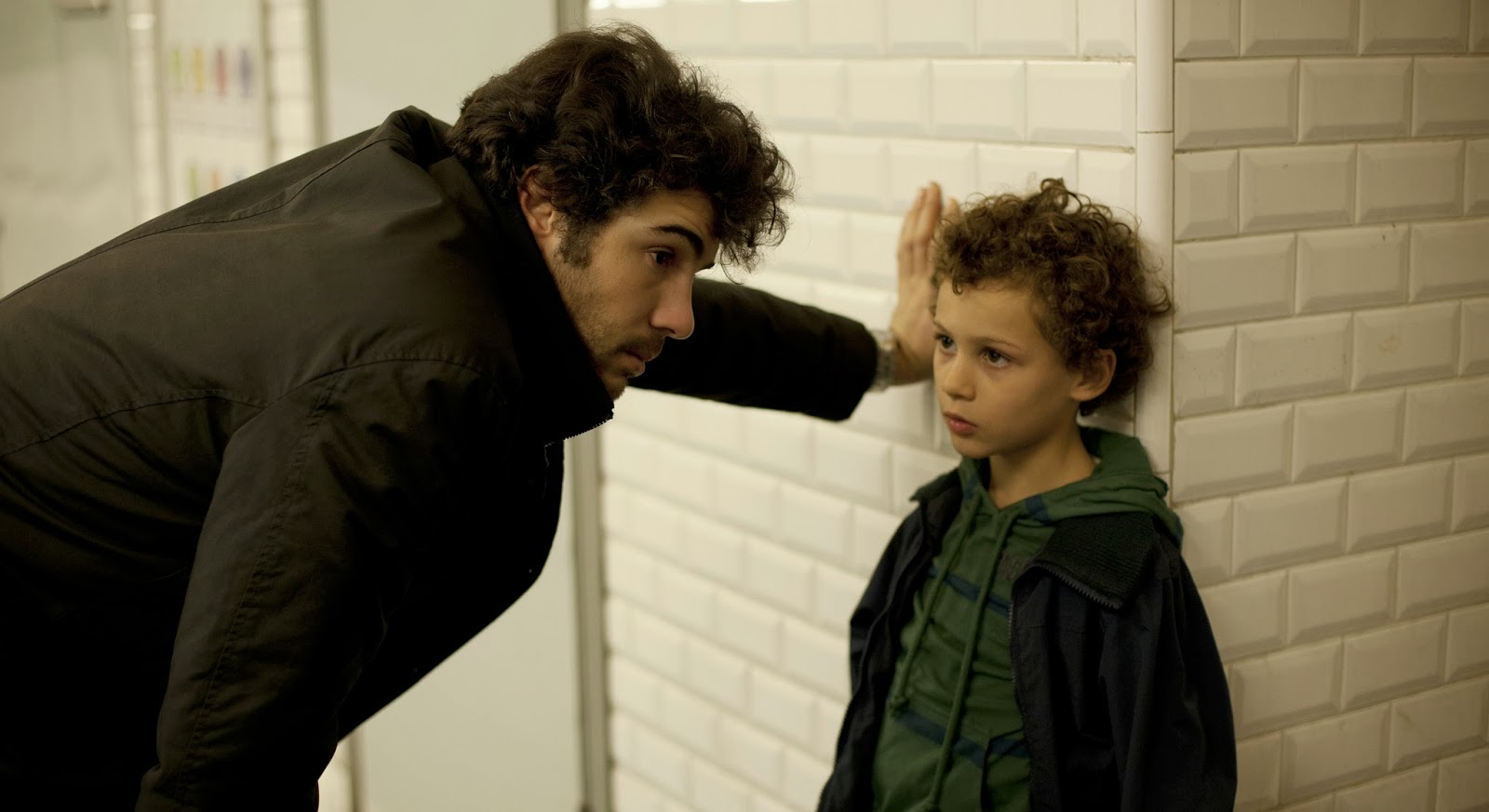
In this new movie by Iranian filmmaker Asghar Farhadi, an Iranian man, Ahmad, returns to Paris to formalize his divorce from his French wife, Marie, so that she can marry her new boyfriend, Samir. We never learn why Ahmad & Marie's marriage broke up, but Marie's domestic life is stressful & chaotic, & her new marriage will combine children from both partners. Without intending to, Ahmad triggers a series of unsettling revelations, leading to increasingly dramatic confrontations. I had to keep reframing the characters’ relationships, & the movie constantly challenged my judgments. Though the film is over 2 hours long & nearly plotless, it is taut & emotionally tense. At times it is like watching a play. Mr. Farhadi has steely clear vision, & there is probably nothing on screen that isn't precisely intended. The cast is attractive & intelligent. A protracted moment during which the 2 men find themselves alone with nothing to say to one another is both funny & exceedingly uncomfortable. The film's children are believable & powerfully depicted. A showdown between Samir & his 5-year-old son in the Paris Metro is painfully distressing to witness.

The movie is mostly in French, though, interestingly, the press materials indicate that Mr. Farhadi does not speak French & that Ali Mosaffa, the Iranian actor playing Ahmad, had to come up to speed in French within a few a weeks. The Past opens in San Francisco on December 27th & then in other Bay Area locations in the following weeks.

§ Le passé (The Past) (2013)
France, 130 minutes
Directed by Asghar Farhadi
Starring Bérénice Bejo, Tahar Rahim and Ali Mosaffa

Monday, December 23, 2013

Sad Christmas Tree

Saddest Christmas Tree 

Someone decided to set up a Christmas tree in a disused corner of my neighborhood gym. It's probably been there for weeks, but I just noticed it today.

Sunday, December 22, 2013

Renegade Craft Fair Winter Market

Renegade Craft Fair photo IMG_20131221_152252_zps6dc886d1.jpgThe winter edition of the indie marketplace the Renegade Craft Fair was impressively crowded Saturday afternoon. It seemed to be a day out for lots of families, & there was much socializing among the predominately female attendees. According to the fair map, there are over 300 vendors, & they put a lot of effort into making their products look appealing. I saw plenty of jewelry, printed tea towels & clothing, as well as a range of items from baseball bats to toffee. Food products seemed to be popular with shoppers. Concert posters by John Howard, some in 3-D & inspired by the psychedelic '60s, were striking. It was nice to see wooden pie boxes made in Chicago. I bought one on-line for a wedding gift earlier this year, but up to now had never had a chance to see it in real life.

§ 5th Annual Renegade Craft Fair Winter Market
December 21 + 22, 11am – 6pm
Concourse Exhibition Center

Wednesday, December 18, 2013

An Appreciation for Music

One day I went out and bought a recording of Beethoven's Second Symphony and was so taken with it that I began to accumulate all the Beethoven symphonies. I then went on to Brahms, Mendelssohn and all the others. By that time, the first long-playing records had appeared, and my friends and I would listen to each other's new albums. That was the way I developed an appreciation for music. It is amazing how much you can learn about music just by reading the backs of album covers.
Charles Schulz. Charlie Brown, Snoopy, and Me

Friday, December 13, 2013

ABS: Handel's Messiah

Grace Cathedral photo IMG_20131211_191638_zps6a6b907b.jpgWednesday night I attended the 1st of 2 Messiah performances by American Bach Soloists in Grace Cathedral. The setting was made even more stunning by seasonal decorations of long, shimmering ribbons hanging in the interior. There was a feeling of a special event. The Rt. Rev. Marc Andrus, Episcopal Bishop of California, introduced the program, praised the musicians & conductor Jeffrey Thomas, & urged us to act in solidarity with the poor.

The performance was immaculate & had the manner of a well-prepared ritual. My concert companion declared it "flawless." The cathedral's long reverberation time gave the music a gauzy halo. The orchestra often played softly to minimize sounding muddy. The overture was pianissimo, creating an eerie & expectant atmosphere. Tempos were measured, with occasional brief rubatos. "He shall feed his flock" had a slightly indulgent pace. Maestro Thomas liked to make clear dynamic contrasts between phrases, & the ends of numbers were always meticulously executed.

The soloists stood in the middle of the orchestra rather than out front. Soprano Shawnette Sulker sang with a high, bright & tight voice. Countertenor Eric Jurenas had a focused, narrow sound & was assigned "But who may abide the day of his coming," "Thou art gone up on high" & "If God is for us," besides the traditional alto arias & may have gotten slightly fatigued. Tenor Aaron Sheehan was wonderfully consistent. His clear, bell-like voice carried well. I enjoyed hearing baritone Mischa Bouvier's warm, furry & comforting sound. John Thiessen accompanied him in "The Trumpet shall sound" on a mellow-sounding Baroque trumpet which he played with impressive accuracy. The chorus of 35 singers was split, with sopranos & tenors on the left of the orchestra, altos & basses on the right. They sang with precision & had a transparent texture. Because of the stereophonic separation, phrases bounced from one side to the other in fugal passages.

Grace Cathedral photo IMG_20131211_192118_zps5d8ee7bd.jpgThe serious-minded audience was as focused as the performers. The attentive silence throughout was palpable. Even though a couple at the end of my row slipped out after the Hallelujah Chorus, this was among the quietest audiences I've ever been in. Despite a program note debunking the origin story of the tradition of standing for the Hallelulah Chorus, the audience rose without hesitation for a "Hallelulah!" with a perfectly smooth & even surface.

§ Handel's MESSIAH
American Bach Soloists
Jeffrey Thomas, music director

Shawnette Sulker, soprano
Eric Jurenas, countertenor
Aaron Sheehan, tenor
Mischa Bouvier, baritone
with the American Bach Choir

Wednesday, December 11 2013, 7:30 pm
Grace Cathedral

Tuesday, December 10, 2013

San Francisco Bazaar Holiday Show

San Francisco Bazaar photo IMG_20131207_152831_zps77b0b5b2.jpgOver the weekend I visited the San Francisco Bazaar Holiday Show at the Concourse Exhibition Center, a sprawling marketplace of independent vendors & hand-crafted items. Just about everything was eye-catching, though this is not a cheap place to shop. The atmosphere & the offerings were generally girlie, & I walked by lots of t-shirts, stationery, jewelry, DIY kits & children's clothing & cupcakes. Stuff made out of other stuff was a common theme. I saw things like wallets made out of seat belts, Christmas ornaments made from maps & terrariums growing in discarded computer chassis. I enjoyed handling the finely constructed artist's books from Green Chair Press, some of which fit inside a matchbox & feature pop-ups & unusual bindings. Attendees, & maybe vendors too, were predominately women.

§ San Francisco Bazaar Holiday Show
December 7th & December 8th 2013 11-6PM each day
Concourse Exhibition Center

Monday, December 09, 2013

East Bay Alternative Book and Zine Fest

East Bay Alternative Book and Zine Fest photo IMG_20131207_122759_zpsacda4db2.jpgThis Saturday I checked out the East Bay Alternative Book & Zine Fest. It's grown quite a bit in its 4 years. Close to a hundred exhibitors were crammed into a downstairs room at Berkeley City College. The space behind tables was so tight that some vendors took to crawling under their tables to get out. They were a diverse group, from artists to established independent publishers to first-time zinesters. It was nice to see some old-school zines, like Abigail Young's Camel Toe, which definitely wins the prize for best-named zine. It has content to match. It was fun to see zinester Jason Martin & recreate our scene from his story in Tablegeddon. I also had enlightening chats with the flat-capped Andy Warner & the ebullient Brian Herrick. There is speculation that the independent comics scene is reaching a crisis where there are more creators than readers & that these expos are just gatherings where creators sell to one another.

§ East Bay Alternative Book & Zine Fest (EBABZ)
Dec 7th, 2013 | 10 am - 5 pm | Berkeley City College