Sunday, November 18, 2007

Masters of Origami

On Saturday afternoon I ventured outside the City to Alameda's K Gallery at Rhyhmics Cultural Works to see an exhibit of local origami artists. I've been doing origami as a hobby ever since my grandma taught me as a kid. In my lifetime I've seen it change from a craft into a full-fledged art form, meriting its own museum exhibitions. The gallery was hosting a standing-room-only class led by Bernard Peyton & Peter Engel. Even though we were led through simple models, I found it quite challenging just to fold in the air. I got to talk with Peter Engel afterwards, & it turns out that there is a whole aesthetic to folding in the air vs. on a flat surface.

Anyway, many of the models on display are astounding. Vicky Mihara's connected cranes are simply insane. & I have to take it on trust that Robert Lang's sharp-edged, multi-limbed arthropods really are folded from a single uncut sheet of square paper.

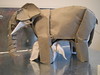
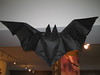
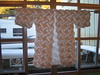
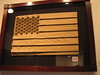
A few pictures from the exhibit:

Squaring the Circle, Robert LangAmerican Flag, Robert LangElephant Mother & Baby, Bernard PeytonBatKimono

Emmanuel Pahud

Emmanuel Pahud, flute
Eric Le Sage, piano

Thursday, November 15, 8:00 pm
Herbst Theatre

REINECKE: Sonata, Undine, Op. 167
BRAHMS: Sonata No. 1 for Flute and Piano in F Minor, Op. 120, No. 1
WIDOR: Suite, Op. 34
STRAUSS: Sonata in E-flat Major, Op. 18

ENCORE:
SCHUMANN: No. 2 Lebhaft, leicht & No. 3 Rasch und mit Feuer from Fantasiestucke Op.73

I first heard Pahud at another Herbst Theatre recital a few years ago, & I was completely swept away by his playing. I felt like he could have switched to tissue paper & a comb & would still have gotten something out of it. I went around saying that he was a musician who transcended his instrument, but this really didn't explain anything. So I was really looking forward to hearing him again & starting to figure out what impressed me so much.

For the 1st half of his program I was again totally absorbed in the music. Pahud played the Reinecke with a light, fluid tone. He demonstrated incredible nuance & control at the end of the quiet movements, when his sound drifted away to silence. When he started the Brahms he had a different sound that was heavier & fuller. It was like he had returned to the stage with a different instrument.

The Widor was the virtuoso show-stopper of the evening. One of the distinctive features of Pahud's playing is his breathing. This piece has lots of extended runs & long phrases, & time & again he would pass up perfectly good opportunities to take a breath. He can keep his sound going without a break through extremely long passages with lots of notes. As a result, I was left feeling breathless!

The Strauss gave Pahud a chance to really wail on the flute, if such a thing is possible. He unleashed a lot of sound, seeming to take the flute to its dynamic limit. In other words, he can be really loud!

Obviously I think Pahud is a very special performer. He communicates so well musically, & he is so at ease. I think the flute is an awkward instrument, but he looks very comfortable on stage. He also comes across as a nice guy. Before announcing his encore he politely thanked us for our patience & kindness.

Saturday, November 17, 2007

Animation Shorts

I returned to the SF International Animation Festival last Saturday for 2 of the shorts programs.

Best of Annecy 2007
Shaun the Sheep “Still Life” (Sadler Christopher, England, 7 min) -- Hilarious Aardman clay animation skit about a farmer's day out with an easel & paints. One clever joke after another. Completely in the style of Wallace & Gromit. In fact the sheep dog with an iPod even looks like a beady-eyed Gromit.
Beton (Michael Faust, Ariel Belinco, Israel, 6 min) -- Absurdist political commentary about the wall in Israel. A military post takes extreme measures to shoot down a kite appearing above the wall.
Welcome to White Chapel District (Marie Viellevie, France, 5 min) -- This one I did not get. A recitation of the grisly deeds of Jack the Ripper illustrated with crude schematics & stop-motion photography.
Devochka Dura (Zojya Kireeva, Russia, 7 min) -- Humorous vignettes about a decidedly individual pre-school girl trying to get the attention of one of her classmates. Animated in loose, fluid pencil drawings.
The Pearce Sisters (Luis Cook, England, 9 min) -- Gruesome tale of 2 sisters leading a hard, isolated life on the English coast. Nasty events ensue when a shipwrecked sailor is rescued from the sea. Clearly meant to be humorously macabre, this is the kind of story that only animation can make palatable.
Premier Voyage (Grégoire Sivan, France, 10 min) Charming clay animation recounting a new father's train journey with his 10-month old daughter. Very philosophical & very French voice-over by the bemused dad.
The Runt (Andreas Hykade, Germany, 10 min) -- Sinister & unrelentingly cruel coming-of-age story told in a visually pared-down & abstract style.
t.o.m. (Tom Brown, Daniel Benjamin Gray, England, 3 min) -- Off-beat vignette about a school boy's peculiar & ritualistic journey from home to school. The traditional cel-animation look of the piece sets us up for a puzzling punch line. Narration, character & animation all work together here.
Méme les Pigeons Vont au Paradis (Samuel Torneux, France, 9 min) -- Satirical story about a country priest in France racing with death for the soul of an old man. In the end, death appears to be the only honest man around. Looks like it was 3-D computer animated. Slapstick but with a surprising moment of gore at the end.

I like programs like this, each short in a different style & from a different country, & each one having a punch at the end. When the lights came up after the last one, I was sorry that the program was over already.

Maker’s Dozen
Raymond (Bif, France, 5 min) -- Stop-motion animation of a live actor who is put through his paces as a human guinea pig being treated with substances that affect his locomotion in abrupt ways. It's extreme slap-stick.
Sleeping Betty (Claude Cloutier, Canada, 10 min) -- Satirical take on the fairy tale, drawn in a rich children's story book style. The animator's sense of humor is very particular, & it took me a little time to start getting the jokes. It's sort of a Mad Magazine look at the story. This animator was at the screening. His film took 5 years to do!
Sundance Forgetfulness (Julian Grey, Canada, 2 min) -- A voice-over about the impossibility of retaining experience, illustrated by live-action film clips in which major visual elements have been whited-out, perhaps by hand.
How She Slept at Night (Lilli Carre, USA, 4 min) -- I didn't get this one at all. In the voice-over a man recounts memories of his wife. This is illustrated with lightly animated drawings. The content repeats 3 times with minor variations.
One D (Mike Grimshaw, Canada, 5 min) -- Taking graphic design to an extreme, a night out at the movies is depicted in a world where everything is no more than a one-dimensional line.
Naked (Sex) (Mischa Kamp, Netherlands, 6 min) -- A real-audio interview with a young person (a pre-teen perhaps?) about his close-calls with sex is illustrated with crude, perhaps rotoscoped, drawings. Maybe it's just me & where I am in my life, but I find this kind of content completely uninteresting.
The Forest in Winter (Jake Portman, Bill Sneed, England/USA, 5 min) -- A crazed mash-up of Little Red Riding Hood in an artsy Soviet style, complete with stilted Russian voice-over, & a loud Japanese snack food commercial. It's a sensory assault, but I have no idea what the point was.
Lovesport: Paintballing (Grant Orchard, England, 2 min) -- A paintball war animated in the style of an early video game. Each skirmish ratchets up the level of violence, though the players are only rendered as abstract geometric shapes. It's just one joke, but it's brief.
Today (Jerry Van De Beek, Betsy De Fries, USA, 2 min) -- TV spot illustrating a joyful Billie Collins poem.
Pingpongs (George Gendi, England, 6 min) -- This one I didn't quite get. Real audio conversation between an elderly husband & wife, full of inanities & knowing pauses, illustrated by crude line drawings of their heads.
Wolf Daddy (Chang Hyung-Yun, South Korea, 10 min) -- Hilarious dead-pan parody of an anime feature film. I'm not an anime fan, but this film is so absurd that even I could recognize the targets of the jokes. There's an over-sized but benign animal, an innocent child, & the continual unexplained juxtapositions of the fantastical with the mundane.
Madame Tutli-Putli (Chris Lavis, Maciek Szczerbowski, Canada, 17 min) Creepy scenario about a woman who takes a nightmarish train journey symbolizing the end of her life. Scary imagery & animated puppets with eerily life-like eyes create a paranoid vision of the world. The animators were present at the screening, & in the Q & A they revealed the secret: Real eyes were filmed & composited into the stop-motion animation. It took 4 years!
Court Order—In Memoriam Peter Mansfeld (Zoltan Szilagyi Varga, Hungary, 8 min) -- A reading of the official documentation of the trial & execution of a political prisoner, illustrated with minimal animation of black & white drawings. I found this one difficult to appreciate. While the subject is clearly important, I wasn't sure how the animation was supporting the story.

This program wasn't as strong as the 1st one, but Madame Tutli-Putli is not to be missed. Interestingly, at the end of the program, the animators remarked that the film isn't as dark as it appeared at the screening. My impression is that the projection method used for the program made everything too dark. I don't know how the program was projected, but it was not film. It may have been video instead.
Saturday, November 10, 2007

Alex Ross at Google

There's a YouTube video of Alex Ross being the Sister Wendy of classical music. How often do you hear Stravinsky being compared to Madonna?

Friday, November 09, 2007

The Magic Flute at SF Opera

Tamino: Piotr Beczala
Pamina: Dina Kuznetsova
Papageno: Christopher Maltman
The Queen of the Night: Erika Miklósa
Sarastro: Georg Zeppenfeld

Conductor: Donald Runnicles
Original Production: Sr Peter Hall
Director: Stanley M Garner
Designer: Gerald Scarfe

I was at the last performance of this opera last Saturday evening, in one of the best seats in the house: front row, grand tier. Musically I was very satisfied. Runnicles's tempos tend to be fast, though I never felt that he was rushing through things. I heard great flute & oboe solos from the pit. The cast was uniformly strong & consistent. The stand-out of the evening was Erika Miklósa as the Queen of Night. Her voice is lighter than one would expect for her character, but her coloratura sounded effortless, nuanced & even lovely. No shrieking to get out those high notes here! She got the biggest ovation of the evening after her 2nd act aria.

The production itself turns out to be a bit old. It's a revival of a 1993 production by Peter Hall. The setting is a clearly fairy tale Egypt, & the costumes are fanciful & bright. We got the clever & cute animals costumes, ala The Lion King. Actually, I totally enjoyed the little penguin in red tennis shoes that was obviously played by a child. I was creeped out by the chorus who all wore identical gowns & masks. It made Sarastro's court look like a totalitarian nightmare state.

Simón Bolívar Youth Orchestra of Venezuela

Shostakovich Symphony No. 10
Bernstein Symphonic Dances from West Side Story
Various Works from Latin America
Gustavo Dudamel, conductor

I was lucky enough to get a ticket for this performance at Davies Hall last Sunday evening. Dudamel & the Venezuela Youth Orchestra remade the orchestral concert experience for me. One attends concerts regularly for years waiting for experiences like this. The orchestra is over-sized: 11 double basses, 8 horns, 4 flutes, bassoons, etc. & Dudamel has them playing with a unanimity of purpose that makes every statement, large or small, emphatic & visceral. The 1st half was the hour-long Shostakovich 10, which Dudamel conducted from memory. It made me want to throw away my anemic Naxos CD version of the same piece. The 2nd half was like being invited to the best party in town. This is the only orchestra I've ever seen that has its own choreography!

Read the raves for this tour:
- Simón Bolívar Youth Orchestra, the greatest show on Earth (LA Times)
- Dudamel is absolutely revelatory (LA Times)
- Fiery Simón Bolívar Youth Orchestra sets Bernstein ablaze (SF Chronicle)

Dudamel returns early next year to lead an SF Symphony subscription concert. I definitely want to see that to find out if he wields the same power in front of a professional orchestra.

The Pixar Story

Last night I went to the opening night of the San Francisco Animation Festival at the Embarcadero Cinemas. I had no idea we even had such a film festival here. They screened The Pixar Story, a new documentary about Pixar Studios by Leslie Iwerks. It amounts to a 90 minute commercial for this hard-working & successful studio. In the Q & A afterwards, the director even admitted that she had a hard time finding a conflict for the film, since so far the studio's history has been one of producing one hit after another.

However, I still learned some things I didn't know before. In the most surprising moment in the film, John Lasseter relates being fired from his dream job at Disney over a project called "The Brave Little Toaster." & I understand a little bit more about Ed Catmull's role in developing the technology that gives the Pixar movies their vivid 3-D look.

The San Francisco Film Society seems like a neat organization. My movie ticket got me into a reception where they served wine, beer & desserts, which all disappeared pretty quickly. Pete Docter, the director of Monsters Inc., was there & drew some pictures for fans. Coming up are screenings of a movie version of Marjane Satrapi's Persepolis at the Kabuki & a new Gus Van Sant movie. The latter I would want to see just because of the venue: it's being held in something called the "Premier Theater" in Letterman Digital Arts Center in The Presidio.

Cool moment of the evening: When I used a $20 bill instead of a credit card to pay for my ticket, the box office guy observed that "Cash is king."

Thursday, November 01, 2007

The Kollektief Accompanies Murnau's Faust

Last night I was able to walk conveniently from my place to the Palace of Fine Arts to see Murnau's 1926 silent Faust accompanied by a European jazz ensemble called the Willem Breuker Kollektief. The event was sponsored by the San Francisco Jazz Festival.

Both the movie & the music were very entertaining. The score used a somewhat dissonant harmonic language that was more contemporary than the film, but it was well-coordinated with the action. I liked that the score picked up on the movie's humor. There were clever moments where the ensemble did fun things to illustrate the scene, such as when the trombone comments on the action by doing a kind of wah-wah laugh, or when the musicians provide the singing voices of a festive crowd, or when one of the saxophone players switches to the harmonica during a sultry situation.

The band was set up on the Palace of Fine Art's vast stage, with the screen looking rather small behind them. To me, this emphasized the music over the movie. I guess since this is happening in the context of a Jazz festival, this is appropriate. But it would interesting to try this at the Castro Theatre as well.

Wednesday, October 24, 2007

Kelly Goto at the Apple Store

Yesterday evening I dropped into the Apple retail store near Union Square & just happened to catch an interesting in-store talk by Kelly Goto of Gotomedia about top-level issues of Web design for the iPhone. I heard about gestural interfaces, emotional vs. practical brands, ritualistic vs. addictive behavior, lifestyle design, "placelessness", & more. It was sponsored by a Web design conference currently going on called the Voices That Matter Conference. What a catchy name. Of course I'm a voice that matters!

Masur at SF Symphony

This past Saturday night I sat in the 2nd tier of Davies Hall for Kurt Masur's SF Symphony program. Masur is 80 now, & I was glad to see that he is still very vigorous & alert on the podium. There was no question that he was in charge of the proceedings. He was always well ahead of the orchestra & giving good preparatory cues.

It was a program that requires an impressive line-up of performing resources. The Lizst is one of those insane virtuosos pieces, but Lortie gave a very tasteful rendition, dispatching all the technical challenges without seeming to show-off.

I've known about the Beethoven Choral Fantasy, but I don't think I'd ever actually heard it before. It is a curious piece. It probably only makes sense in the context of that famous program (including the premieres of the 4th Piano Concerto & the 5th & 6th Symphonies) for which it was the encore. It reminded me of the Triple Concerto in that in lesser hands it can probably sound like much ado about nothing. Masur did a good job keeping the disparate sections sounding like they were all really part of a whole. It was fun to hear the vocal soloists drawn from the SF Chorus. They did a great job. There were 6 soloists for what seemed to be 4 vocal lines Is it usually performed with the soloists doubled up?

Masur led a weighty & driving performance of Alexander Nevsky that seemed to go by very quickly. The singer for the Prokofiev, Nancy Maultsby, had to sit on stage the whole time waiting for her one big number near the end of cantata. I imagine it must be tough to be silent for half an hour then have to deliver this intense solo.

Liszt - Totentanz
Beethoven - Choral Fantasy
Prokofiev - Alexander Nevsky

Kurt Masur, conductor
Nancy Maultsby, mezzo-soprano
Louis Lortie, piano
SFS Chorus

Saturday, October 20, 2007

Alex Ross at Berkeley

Went to the Berkeley campus on Thursday night to see Alex Ross promote his new book, The Rest is Noise. He gave a half-hour talk with musical examples about 20th century music originating from the Bay Area. He was then interviewed by Cynthia Gorney about classical music in general & took some audience questions. At the top of the interview, Gorney asked him to read his account of the famous Rite of Spring premiere (which she insisted on calling "Rites of Spring"). He started reading, then, as he got to his description of the music, he ran back to the podium & started up a sound clip of the Dance of the Adolescents. He made it a real multimedia event. The whole evening would make a great podcast.

He comes across as very conscientious. He avoided making any critical comments, even when someone asked him for an opinion of Appomatox. In talking about Strauss, he did observe that "there's hardly a piece by Strauss that doesn't have something wrong with it." But for the most part he tried not to be too humorous or provocative. He urged us to seek out smaller, younger ensembles, such as Alarm Will Sound.

I'm a fan of Alex's blog, so I have to admit I was pretty excited about seeing him in person. I bought the book, got it signed & got to tell him what a great job I think he does with the Web.

Outdoor Clothing Market in Hayes Valley

In my roaming around the City on Sunday, I happened upon a hipster clothing & jewelry outdoor market centered around Hayes & Octavia. There's always something going on in the nooks & crannies of San Francisco.

My Kid Could Paint That

Andras Sciff's recital so dominated my memory of last weekend that I neglected to mention I saw Amir Bar-Lev's meta-documentary My Kid Could Paint That. It records the filmmaker's desire to believe, but failure to prove, the authenticity of the paintings attributed to Marla Olmstead, a 4-year-old painting prodigy. The film leaves open the question of Marla's talent, but to the audience it looks like a scam. Along the way, the director raises questions about aesthetic judgment, commerce & exploitation in art.

I don't have any doubts about the aeshetic validity of abstract art. When the film shows glimpses of abstract paintings, I can immediately recognize the ones by artists I know: Rothko, Phillip Guston, Motherwell. In this case, the commercial aspect is probably the more interesting. There's a great scene where gallery owner Anthony Brunelli sells a new Marla painting to a somewhat conflicted art patron.

It would be interesting to compare Marla with Wang Yani, the painting prodigy from China who was a big hit with her monkey paintings in the 80's. Marla is getting older & is still selling paintings, so the story is not over yet. I'd be curious to see a follow-up after several more years.

Tuesday, October 16, 2007

More András Schiff

On Sunday evening I was back at Davies Hall for the 2nd installment of András Schiff's Beethoven Cycle. I was already impressed by his 1st recital, & this evening he continued to go from strength to strength. He states his musical ideas clearly & cleanly. He gives each piece a strong character all its own. The Opus 10, No 2 was so jolly, witty & playful that I had to smile. Opus 10, No. 3 was powerful in the 1st movement, then searching & brooding in the slow movement. A mood of recovery takes over, only to suddenly flit away at the very end. Schiff makes every phrase a statement about something. He was playing with such confidence that evening that I felt he must be at the top of his game.

The 2nd half of the program consisted of a single work: the splashy Pathétique Sonata, with its fiery 1st movement & time-stopping slow movement. This was virtuoso playing, but Schiff's technique was always at the service of the music. He received an immediate standing ovation from the full house at the conclusion of the printed program. By way of explanation for his encore, he told us, "The Pathétique did not come out of nowhere. But Beethoven's model is not Mozart or Hadyn. It is Bach." Schiff then played Bach's Partita No. 2 in c minor, the entire thing, including repeats! It was a vigorous interpretation, almost aggressively pointed & clear. With this encore, he added a whole a new dimension to an already extraordinary recital. It was surprising yet apt, extravagant yet intelligent, grand yet intimate. This was truly ending at the highest possible place.

Saturday, October 13, 2007

Angela Hewitt Plays Bach

Last night I was at the First Congregational Church in Berkeley to hear Angela Hewitt's marathon recital of Bach's Well-Tempered Clavier, Book II. It was the last of 3 demanding Bach recitals she gave this week. Hewitt is yet another highly touted, frequently recorded performer that I had never heard before. This recital was well attended by a very committed audience. The people seated on both sides of me attended all 3 of her recitals. "Bach World Tour" t-shirts were on sale. Hewitt is tall & slender & looks really good at the piano.

Yet I have my doubts. There's a sort of undulating movement to her playing, but I was often unsure how she meant to articulate a given theme, even though I had plenty of opportunities to hear her play it. I'd hear the theme once & think there was a crescendo in it. Then I'd hear it again & think, no, she's being equally emphatic with each note. It would come around again, & I would think that maybe she was doing a slight crescendo then dropping off. This vagueness was also evident in the way that pieces ended. Usually Hewitt would do a slight ritard & hold the last chord, but the length of time she held the chord always felt arbitrary to me. I felt like the musical ideas were not clearly stated, & the result was a kind of aimlessness.

I don't want to be totally negative, though. Hewitt performed an impressive physical feat with seeming ease. She even looked good turning her own pages. She exudes an aura of fitness. & we in the audience got to hear some of the best music ever written.

Thursday, October 11, 2007

András Schiff Plays Beethoven

I was at Davies Hall last Sunday evening to hear the 1st installment of András Schiff's cycle of all the Beethoven Piano Sonatas. I had never heard him before, & I was surprised by the big turn-out for what I thought was a hard sell. For the 1st half, he played the 3 Opus 2 Sonatas. His approach is very intellectual. Each sonata was considered as a whole, with barely a break between movements. During the 1st 2 I was beginning to wonder whether I would find such a rigorous program interesting, but the evening came alive when he got to the 3rd sonata. It was clear that this piece was the culmination of the previous two & that Schiff had a long arc to his interpretation. It was suddenly very engaging. I like his crisp playing & his organ-like chords. The guy was totally performing without a net too, doing the whole recital by memory, which scares me a little. As an encore he nicely mixed things up by offering a substantial movement of a Schubert piece, which he said was "clearly inspired" by the 4th sonata. I was very inspired by Schiff's playing, & I'll be back this Sunday, looking forward to hearing the Pathetique.

I'll just add that the audience was unfortunately very noisy. There was quite a bit of coughing. I was seated near a middle-aged woman who contributed a staccato fit of coughing to each sonata. A cell phone went off in the 1st half & it took at least 2 rings before the owner got to it. Late-comers were seated during the performance, & there were a lot of them, probably because they were unaware of the early start time.

Sunday, October 07, 2007

Zine Fest & Sand Castles

As I write this late Tuesday evening, it's raining, but this past weekend we had gorgeous, sunny weather & lots of competing events in the City. On Saturday I went to the Mission to check out the Zine Fest for the first time. It's much more modest in scale than the APE show & much more local, though I also met people who had traveled from other parts of the country for this event. I even bought a few things:
  • Nonsensical is a small, personal & exquisite journal zine.
  • The sensitive stories in Laterborn, by Jason Martin, made me think about being in love, though the subject itself is barely mentioned.
  • I let Andy Hartzell talk me into buying the 1st 2 parts of his Biblical send-up, Monday, even though it may be a long time before he finishes this 5-part series. So far it's very clever & very funny. He better have part 3 the next time I run into him.

After a quick lunch at a Cafe Petra (whose awning plainly lists the four magical elements: Coffee Tea Food Internet), I shared a crowded bus ride to Ocean Beach with people heading to the Hardly Strictly Bluegrass concert in the Park. At the beach I saw the sand castle competition. These sand sculptures were huge! My favorites were the steaming volcano & the animal version of Mount Rushmore.

While I was at the beach I got glimpses of the Blue Angels doing their air show along the water front. I spent the weekend deliberately staying away from my Marina neighborhood to avoid the big crowds that show up for Fleet Week. However, the crowds lingered in the neighborhood long into the night. I had wanted to go to Dolores Park in the evening to see the free outdoor movie, but I became trapped in my neighborhood. I waited over half an hour for the 22 but it never came, so I just gave up. Instead I stayed home, did my laundry & read my new zines.

Thursday, October 04, 2007

Tannhäuser at The San Francisco Opera

Last Wednesday I was at the San Francisco Opera to hear the new production of Tannhäuser. I was very happy with the the performance musically. I would have much preferred to hear Runnicles in the pit, but still I thought the orchestra played expressively under Donato Cabrera. I hope it was because they were well-rehearsed by Runnicles. The opera orchestra sounds great these days: Uniform playing within sections & beautiful solos, from the flute, violin & clarinet in particular. I never realized that there is such an extensive bass clarinet part. It reminded me of the prominent use of the instrument in Die Walküre.

The cast was uniformly good. Petra Lang as Venus & Petra Maria Schnitzer as Elizabeth were both excellent singer/actors. I liked Petra Lang's earthy Venus. I also liked Eric Halfvarson's weighty & sonorous Landgraf. He got to make his entrance riding a real horse & seemed very pleased with his horsemanship! Peter Seiffert did a fantastic job in the punishing title role. After the lengthy 1st scene with Venus I was already wondering if he would be able to hold out for the whole opera, but I needn't have worried. If anything, he sounded even stronger in the 3rd act Rome Narrative.

I'm not sure who it was exactly, but one of the tenors in the Landgraf's court had this very clear, bright voice that cut through even the big ensembles numbers. I think it was Stefan Margita. Whoever he was, I hope I get to hear him again in a bigger role.

This is a new production directed by Graham Vick. The moment the stage was revealed, I knew we were in for another Eurotrash production. The entire action takes place in a large barn-like, fully enclosed space with a dirt floor & a barren tree stage right. Plenty of wacky shenanigans, often in direct opposition to the action of the opera. For example the famous entry of the guests chorus in act II doesn't accompany the chorus actually entering. The chorus fills the stage during the orchestral introduction, then they start singing with everyone standing still on stage. In the 3rd act, in a shocking departure from the text, Wolfram strangles Elizabeth then sings the Abendstern song over her dead body. I pity someone coming to this opera for the first time & trying to make sense of it. These sorts productions I think only work, if they work at all, for audiences that are over-familiar with the opera in question.

If I had to assess the production, I'd say that it was a series of dream images or hallucinations about an internal struggle between one's higher & lower instincts. But I might be giving the staging more credit than it is due. The local bloggers have already thoroughly ridiculed it:

Tuesday, October 02, 2007

Amazon MP3 Downloads

I just successfully purchased an MP3 from Amazon's recently launched MP3 download service, still in beta. Being the cautious type, I bought just one track: a solo piano arrangement of Rhapsody in Blue, performed by George Gershwin himself (or so they claim -- I read all about Joyce Hatto in last month's New Yorker, so I don't know what to believe anymore). It was 99 cents, though most of the tracks are for 89 cents. At 15 minutes, this is an extra-long track, so I think it was a bargain anyway. I didn't download the MP3 installer, but once I verified payment, it was just like downloading any file from the Web. The big deal here is no DRM! I copied it immediately to iTunes, then onto my iPod Nano, & I'm listening to it on my stereo now. It sounds pretty good. Plus it's been encoded at 217kbps (VBR) which is a much higher rate than iTunes at 128kbps.

I know that others have had problems, but this simple transaction worked out for me. I guess next time I should try getting a whole album, which does require using their downloader app. I'm a Mac OS X user, by the way.

What's really funny is that Richard Wagner is the top music artist bestseller at the moment. Yesterday I'm pretty sure I saw the Clemens Krauss Ring selling for around $13, but today it's listed at $126.42. A pricing error in the database?

Monday, October 01, 2007

Alex Ross at Cal Performances

Cal Performances has announced an appearance by New Yorker music critic Alex Ross on the Berkeley Campus, Thursday, October 18th, 7:00pm Wheeler Auditorium. Free to the public too! The New York Sun has a very positive review of his up-coming history of 20th century music (via Arts and Letter Daily).